
Virtual Assistant Provider guide
Ecommerce Assistant Catalog Rollback Plan for High-Risk Product Changes
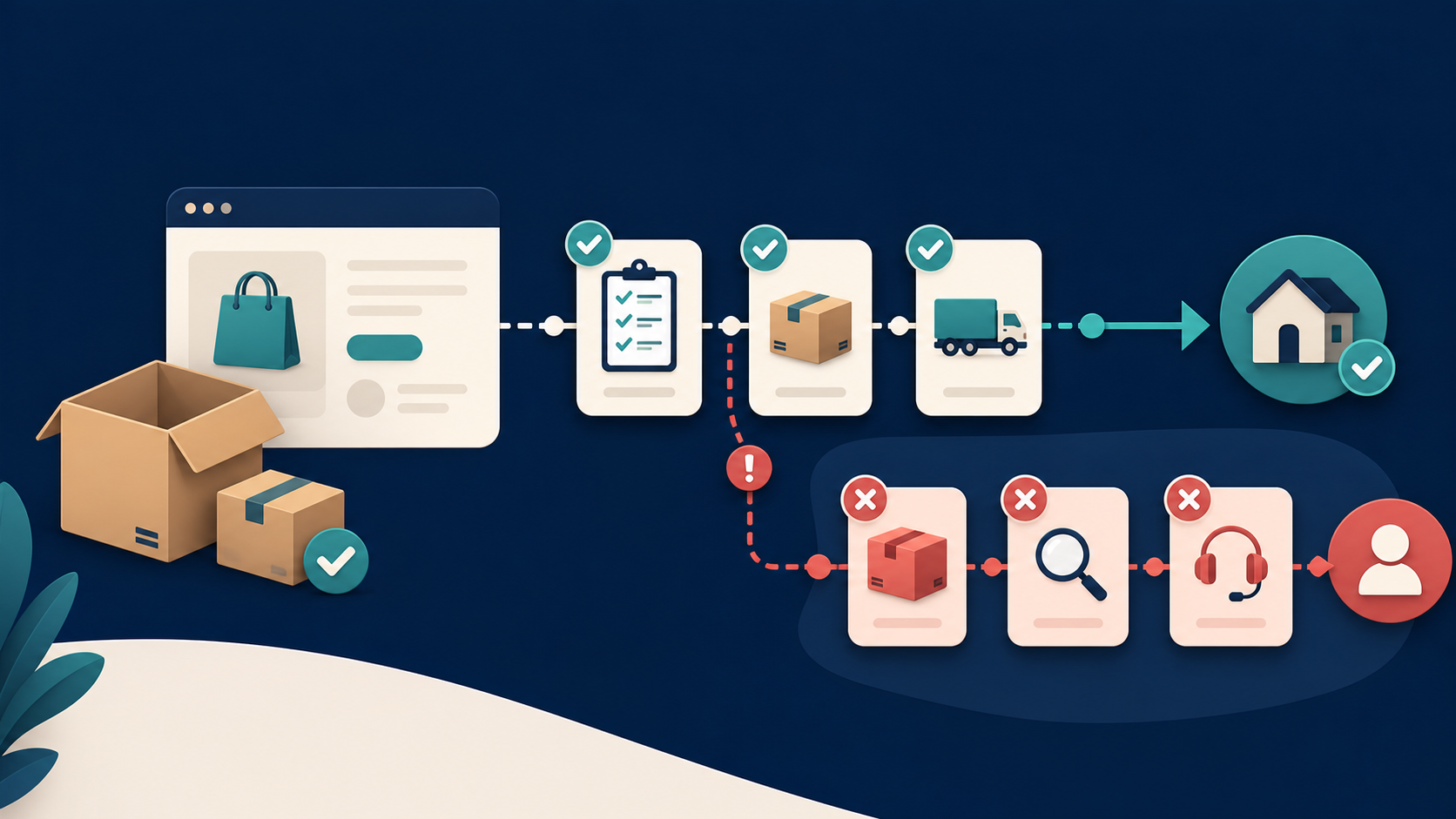
Treat bulk catalog edits as controlled releases with a captured before-state, representative checks, pause thresholds, and verified recovery.
Key takeaways
- Define the exact change population and exclusions.
- Capture a recoverable before-state before editing.
- Test variants, channels, and downstream behavior.
- Pause and roll back against written thresholds.
A catalog edit can behave like a software release
Changing hundreds of product records is not ordinary data entry. One import can alter prices, availability, tax categories, shipping attributes, variant relationships, marketplace listings, search filters, feeds, and customer-facing claims. The storefront may look normal while a downstream channel rejects items or a subset of variants inherits the wrong value. A safe assistant workflow treats the change as a bounded release with an owner, a tested population, and a recovery path. Write a change statement before opening the bulk editor. Name the business outcome, fields allowed to change, product and variant population, channels affected, source file, requested launch window, approver, and exclusions. Include fields that must remain unchanged. “Update the summer catalog” is not executable; “apply the approved shipping-class mapping to these 184 active SKUs while preserving price, inventory, title, tax, and variant relationships” can be checked. Separate content preparation from release authority. An ecommerce assistant may assemble updates, validate identifiers, run a sandbox or small sample, and prepare evidence. Price strategy, regulated claims, destructive merges, tax configuration, and final high-impact release may require other owners. The plan should not grant broad authority simply because the interface allows it.
Capture a before-state that can actually restore service
Export the exact affected records immediately before the change and record the platform, store, time zone, export time, field set, filters, row count, and file hash where the process supports it. Include stable product and variant identifiers. Titles or SKUs alone may not be unique or permanent. Preserve relationships and channel-specific values needed for recovery, not only the columns being edited. Test the restore method before relying on it. Some platforms interpret blank cells as no change; others treat them as deletion. Imports may create new variants instead of updating existing ones, and an export may omit metafields, media order, or marketplace overrides. Document what the native history can restore, what the import can restore, and which changes require a separate manual or integration-specific reversal. Protect the snapshot as operational and potentially sensitive data. Limit access, keep it out of personal drives and email, and set a retention rule. A rollback file should not become a permanent shadow catalog. Also capture active promotions, scheduled jobs, feeds, and integrations that could overwrite the restored state after rollback.
Use a representative canary instead of one easy product
Select a small test set that covers the risky shapes in the population: a single-SKU product, multiple sizes or colors, a discounted item, an out-of-stock variant, a product on more than one channel, a bundle, an item with special shipping, and a record with optional fields. Add the highest-value or most consequential category where appropriate, but release it only if the owner approves the exposure. Apply the proposed transformation to a copy or supported test environment first. Compare every allowed field and verify that protected fields remain identical. Then run the canary through the real publishing path during a controlled window. Check the product page, variant selection, cart, checkout calculations where authorized, internal search, category membership, structured data, feeds, and any marketplace acceptance messages. Do not validate only the first row or the parent product. Bulk defects often appear at the variant or channel level. Record expected and observed results with stable identifiers. If a platform needs time to propagate, define the observation window and keep the release paused until the result is knowable.
Set pause and rollback rules before the launch
Use observable thresholds. Pause on unexpected price or inventory changes, broken variant selection, identifier mismatch, rejected feed records above the approved limit, protected-field differences, missing images, tax or shipping changes, or any customer order affected contrary to the release plan. Define who can order a stop and who can approve continuation after a corrected sample. At launch, freeze competing catalog jobs for the affected population when possible. Record the input hash, operator, start time, platform job identifier, accepted and rejected counts, and completion time. Reconcile the requested population against updated, excluded, failed, and unchanged records. Do not rerun an ambiguous job until you know whether the platform partially applied it. Rollback means restoring the verified before-state for the affected records and then testing the customer and channel outcomes. It does not mean uploading the original file blindly. Stop scheduled jobs that would reapply the defect, preserve the failed input and logs, restore by stable identifier, and verify counts and protected fields. Escalate customer orders, payments, or published claims already affected rather than trying to erase their history.
Verify recovery and improve the release design
After the change or rollback, monitor long enough to see delayed feeds and caches update. Sample every risk category, review platform errors, and compare a post-state export with both the approved change set and protected before-state fields. Confirm actual images and variant behavior, not merely successful HTTP responses or an import message marked complete. If customers encountered incorrect information, route the cases to the responsible owner with timestamps and evidence. The assistant should not invent compensation, legal language, or price commitments. Keep the incident record additive: intended change, actual effect, containment, recovery evidence, affected orders, decisions, and preventive action. NIST’s [Cybersecurity Framework 2.0](https://www.nist.gov/cyberframework) provides a general structure for governing, identifying, protecting, detecting, responding to, and recovering from operational risk. The Federal Trade Commission’s [Mail, Internet, or Telephone Order Merchandise Rule resources](https://www.ftc.gov/legal-library/browse/rules/mail-internet-or-telephone-order-merchandise-rule) are relevant when availability and shipment representations affect US orders. Apply platform terms and the consumer, tax, product, and advertising rules relevant to the catalog. For controlled catalog operations with escalation kept with the business owner, review our [ecommerce virtual assistant services](/services/ecommerce-virtual-assistant-philippines) or [contact us](/contact).
Provider questions to copy
"Can you show how this role is screened, trained, checked each week, and replaced if fit is poor?"
"Can we start with a small task list before we expand the role?"
FAQ
Is exporting the catalog enough for rollback?
Not necessarily. Verify that the export contains stable identifiers, relationships, channel values, and every field the restore process needs, then test how blank and missing values behave.
How large should a catalog canary be?
Use the smallest set that still represents the risky product, variant, promotion, shipping, and channel shapes in the planned population.
When should an assistant stop a bulk update?
Stop on any written threshold such as protected-field drift, incorrect price or stock, broken variants, identifier mismatch, unexpected channel rejection, or customer impact.
Sources and notes
These sources are included as planning references. They do not replace legal, tax, security, or HR advice.
- NIST Cybersecurity Framework 2.0: Official operational risk and recovery framework.
- FTC Mail Order Rule: Official US rule resources concerning merchandise shipment representations and delays.