
Virtual Assistant Provider research
Remote-workspace connectivity research: plan questions without ranking a worker by geography
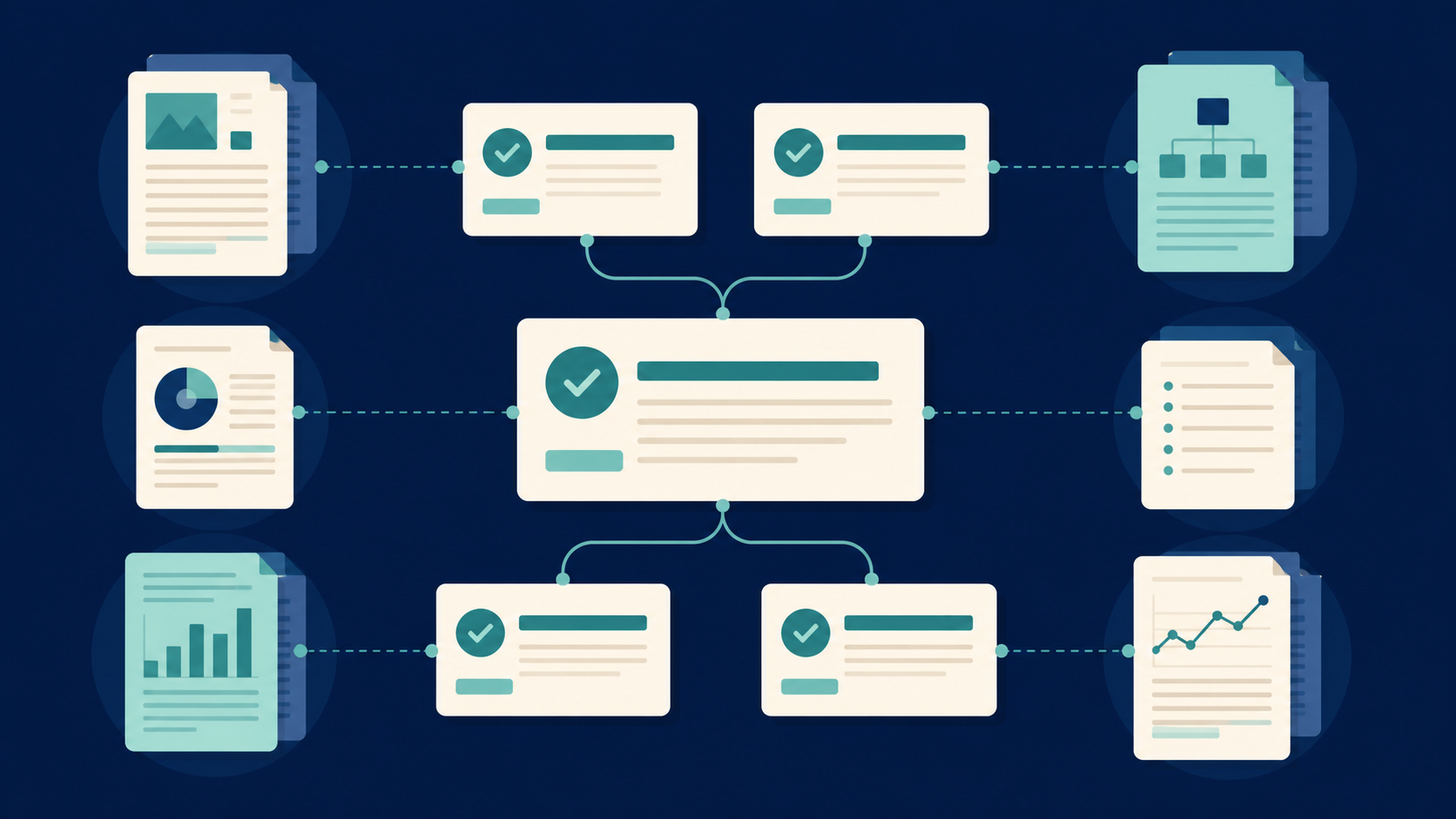
How to organize connectivity evidence for a remote support role while avoiding unsupported assumptions about a person or location.
Philippines evidence
Six headline statistics, with limits
These figures describe the national or industry setting around Philippines-based remote work. They are screening context, not a promise about any applicant, provider, connection, or result.
Decision question
Authority checks
Records dated
Unsupported promises
Name the unit and the time window
For remote-workspace connectivity research: plan questions without ranking a worker by geography, the first research choice is the unit being counted or compared. It might be one request, one document, one public page, one event, or one account event. Write that unit before opening records, then name the field period and the population included. Without those choices, a neat total can combine unlike cases and make a narrow queue look like a general market fact. The research owner should be able to explain what is included, excluded, and missing.
Record the source timestamp separately from the event date. A page accessed today may describe a policy for a future period; a message received yesterday may refer to an older decision. Preserve local dates and time zones where they affect meaning. When a date is unavailable, use an explicit unknown state rather than borrowing a neighboring record’s date. This is especially important for a Philippines-based support role working with owners or sources in several jurisdictions.
Collect evidence that another person can check
A useful remote-workspace connectivity research: plan questions without ranking a worker by geography brief keeps the original observation beside the normalized field. Connectivity planning is useful when the actual work window, primary path, backup path, recovery steps, and test date are recorded. Do not replace the source wording with a stronger summary unless the source supports that exact strength. Link the authority, quote only what is necessary, and add a short note explaining why the source is relevant to the question.
Test the extraction rule on ordinary, incomplete, and conflicting examples. A missing value, a contradiction, and a negative result should have different labels. Ask a second reviewer to reproduce a small sample and record disagreements. Agreement does not prove the conclusion, but it shows where the method needs clearer definitions before a larger set is interpreted.
Protect people and limit access
Research records often contain more personal detail than the decision requires. Start with the minimum fields, use a study identifier, redact names and account numbers from working copies, and store raw material only in the approved system. NIST privacy guidance supports identifying and managing privacy risk in relation to the purpose of processing. A support researcher should not move sensitive material into an unapproved note merely because it is easier to compare there.
Use named accounts and least privilege for the source systems. CISA’s performance goals emphasize practical protection for accounts and data.[2] If access reveals health, financial, identity, employment, or confidential commercial information, stop and ask the owner to confirm the purpose and reviewer. The role can organize evidence without expanding its own authority to approve, disclose, diagnose, or promise.
Decision table
How to use the evidence without overclaiming it
Each signal can improve a buyer’s questions, but none replaces candidate-level proof. Read the final column before turning a national number into a hiring assumption.
| Signal | Finding | Buyer use | Limit |
|---|---|---|---|
| Research question | Connectivity planning is useful when the actual work window, primary path, backup path, recovery steps, and test date are recorded. [5][2] | Use it to define the fields and sample before collecting records. | It does not answer an owner-only decision. |
| Source authority | U.S. Bureau of Labor Statistics is the named authority for part of this question. [5] | Read the linked definition and retain its date and scope. | Authority for a rule is not proof about a specific case. |
| Observed record | A dated, source-linked record gives the next reviewer something to reproduce. [5][2] | Keep the original field, coding rule, and unresolved question. | A record cannot prove an unobserved motive or outcome. |
| Owner handoff | The next decision belongs to an operations or staffing owner. [5] | Route exceptions with the evidence and the exact question. | The correct decision maker depends on the engagement and context. |
Interpret the pattern with its denominator
A finding should state the numerator, denominator, period, and selection rule when those quantities apply. Counts help show volume; percentages help compare groups only when the groups are defined and large enough for the question. A difference may reflect channel mix, missing data, seasonality, or who chose to respond. Treat those as alternative explanations to examine, not nuisances to hide.
Keep observation, interpretation, and recommendation in separate sentences. “Nine records mentioned a delay” is an observation. “The sample may indicate a handoff gap” is an interpretation. “The owner should test a status field next month” is a recommendation. This separation lets an operations or staffing owner disagree with the interpretation while still using the underlying evidence.
Design the owner handoff
The final brief should open with the decision question and close with the next check. In between, show scope, sources, method, results, exceptions, and limitations in that order. Give each material finding a record link or identifier, a source date, and an owner. A reader should not have to reconstruct the sample from a long message thread or infer which table cells are assumptions.
A Philippines-based assistant can make the handoff concise by separating “checked,” “not stated,” “conflicting,” and “needs owner decision.” The owner receives a useful queue rather than a false sense of certainty. Route legal interpretation, financial authorization, medical or safety judgment, customer remedy, and commercial commitments to the appropriate qualified person.
Limitations and conclusion
This method cannot turn a small sample into a population estimate, a public page into a current guarantee, or an administrative observation into professional advice. Sources can change, records can be incomplete, and the people who appear in a dataset may not represent the people who do not respond. If the decision is material, repeat the check close to action and document what changed since the earlier observation.
The defensible conclusion for remote-workspace connectivity research: plan questions without ranking a worker by geography is bounded: organize the evidence, expose the unknowns, and give an operations or staffing owner a clear next question. A careful research role improves the quality of a decision without claiming ownership of the decision itself. That boundary is part of the finding, not a disclaimer added after the work is done.
Practical implications
Match the work sample to the role
A useful test looks like the first small task the person will do after hiring. Keep all sample data invented or redacted, then score the same qualities for every candidate.
Set the scope
Define what can a connectivity questionnaire establish about a work setup, and what remains an individual test? with a period, population, source list, and stop rule.
Keep the record safe
Use minimum necessary fields, approved storage, named access, and redaction before sharing a sample.
Separate finding from interpretation
State what was observed, what it may suggest, and what additional check would distinguish alternatives.
Escalate the decision
Return policy, legal, financial, safety, and commercial decisions to an operations or staffing owner.
Methodology and limitations
How this report was built
This report was prepared for the an operations or staffing owner question and uses the linked authorities accessed on August 14, 2026.
The sources provide definitions, public evidence, or methodological boundaries. They do not evaluate a specific person, provider, customer, venue, supplier, or business outcome.
Interpretations are bounded by the stated sample, source dates, and missing fields. A current owner should recheck volatile facts before acting.
Five buyer questions
Frequently asked questions
Can a support researcher decide the remote workspace connectivity outcome?
No. The researcher prepares a source-linked brief and routes exceptions; the named owner or qualified specialist decides.
What should each record contain?
Keep the original observation, source, access or event date, scope, coding rule, uncertainty, and next owner.
Does a public source prove a specific case?
No. It supplies context or a rule boundary; case-level facts still require direct confirmation.
Numbered sources
Direct evidence used in this report
- Occupational Outlook Handbook: Office and Administrative SupportU.S. Bureau of Labor Statistics · accessed 2026-08-14
- Cybersecurity Performance GoalsCybersecurity and Infrastructure Security Agency · accessed 2026-08-14