
Virtual Assistant Provider research
Subscription-cancellation research: separate customer signals from retention decisions
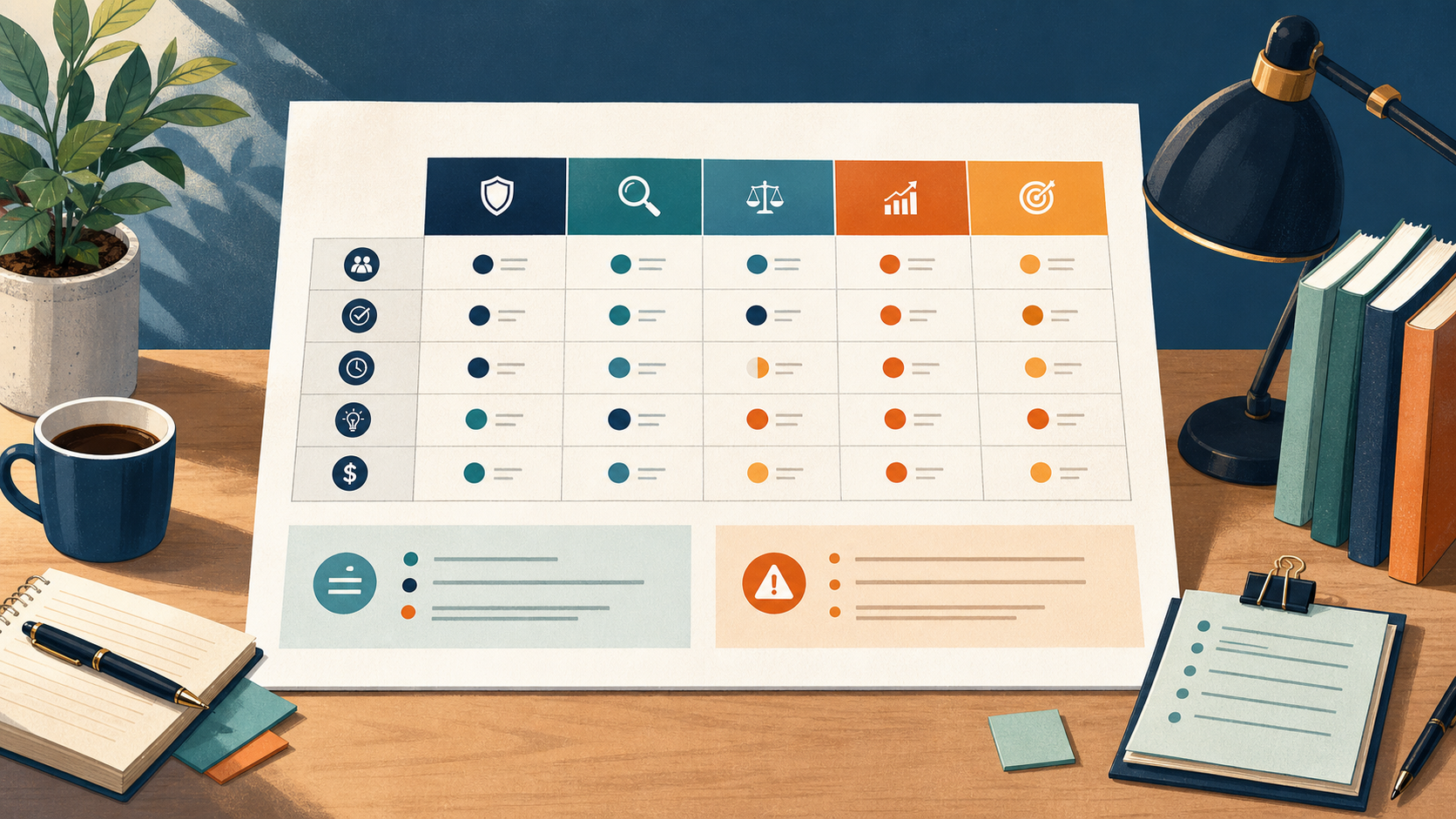
A bounded study of cancellation reasons, missing context, and handoff evidence for a Philippines-based support research role.
Philippines evidence
Six headline statistics, with limits
These figures describe the national or industry setting around Philippines-based remote work. They are screening context, not a promise about any applicant, provider, connection, or result.
Decision question
Authority checks
Records dated
Unsupported promises
Define the event before counting it
A cancellation record can mean a customer clicked a button, allowed a renewal to lapse, asked support to stop billing, or left after a failed payment. Those events are operationally different. Before a Philippines-based researcher counts anything, write the event definition, observation window, channels included, and the system of record. If the study combines voluntary cancellations with involuntary payment failures, the result will describe a mixed queue rather than a single customer decision.
The useful unit is usually a subscription event linked to a cohort and date, not a dramatic message. Preserve the customer’s selected reason and a short redacted excerpt, but do not infer motive from tone. A request for a lower bill may indicate price sensitivity, a missing feature, a temporary cash constraint, or a policy misunderstanding. The record can show what was said and when; it cannot prove which explanation is true.
Build a defensible sample
Set a period such as four complete weeks and state whether the sample includes monthly, annual, trial, or reactivated accounts. Report the denominator: cancellations per eligible renewal or counts by plan cohort, rather than presenting a raw total as a rate. Keep a separate field for missing reason, multiple reasons, and reason selected from a menu. Missingness is a finding about the record, not permission to fill the gap with the most common category.
A second reviewer should code a small redacted sample using the written categories. Disagreements reveal where “billing,” “value,” “technical,” and “service” overlap. Record the rule that resolved each disagreement, then rerun the count. A small audit cannot establish perfect reliability, but it makes the interpretation reproducible and shows the owner where the categories are unstable.
Protect personal and billing context
Cancellation records may include names, account identifiers, payment references, health information, or messages written in distress. Use the minimum fields needed for the question and keep raw messages in the approved system. NIST’s Privacy Framework is a useful boundary: identify the data needed for the purpose, govern its handling, and communicate how privacy risk is managed.[1] A research extract should use a study ID instead of copying a full account history.
The researcher may note that a customer asked about a charge or could not find a setting, but should not decide whether a refund, exception, or retention offer is owed. CISA’s performance goals also support protecting accounts and data through appropriate access and authentication. The owner retains authority over billing corrections, legal language, policy changes, and contact with a vulnerable customer.
Decision table
How to use the evidence without overclaiming it
Each signal can improve a buyer’s questions, but none replaces candidate-level proof. Read the final column before turning a national number into a hiring assumption.
| Signal | Finding | Buyer use | Limit |
|---|---|---|---|
| Research question | Cancellation research is useful when the event, stated reason, cohort, and missing evidence remain separate from a claim about why customers leave. [4][1] | Use it to define the fields and sample before collecting records. | It does not answer an owner-only decision. |
| Source authority | U.S. Small Business Administration is the named authority for part of this question. [4] | Read the linked definition and retain its date and scope. | Authority for a rule is not proof about a specific case. |
| Observed record | A dated, source-linked record gives the next reviewer something to reproduce. [4][1] | Keep the original field, coding rule, and unresolved question. | A record cannot prove an unobserved motive or outcome. |
| Owner handoff | The next decision belongs to a customer-success or product owner. [4] | Route exceptions with the evidence and the exact question. | The correct decision maker depends on the engagement and context. |
Interpret patterns without overstating them
Compare reasons by defined cohort, tenure band, product area, and channel only when those fields are complete enough to support the comparison. A difference between new and long-standing accounts may reflect the mix of products, onboarding quality, or which customers answer the survey. It is not automatically evidence that tenure causes cancellation. Show counts alongside percentages and state the denominator for every comparison.
Look for negative evidence as well. If a large share has no selected reason, the next intervention may be better reason capture rather than a product change. If support transcripts mention a feature but the cancellation form does not, the two instruments are measuring different things. The conclusion should identify the strongest observable signal, the plausible alternatives, and the next question that would distinguish them.
Turn findings into an owner-ready brief
A useful brief starts with the question, population, field period, data exclusions, coding guide, and table of results. For each notable pattern, include an example record with identifying details removed, the source field, and the limit. This lets the customer-success owner inspect the reasoning without asking the researcher to reproduce the entire account history.
Recommendations should be staged. First repair a missing field or unclear cancellation reason. Then test a small change, such as clearer renewal language, and define the outcome and comparison period before acting. Keep offers, product commitments, and policy decisions with the named owner. A support research role supplies evidence; it does not turn a frequency table into an approved retention strategy.
Limitations and conclusion
This study cannot establish lifetime value, customer intent, causation, or the financial effect of a retention action unless those outcomes and methods are separately defined. Survey responders may differ from silent customers, selected reasons may be constrained by the form, and records may be duplicated across systems. Changes in billing policy or product packaging can also break comparisons across periods.
The defensible conclusion is narrow: a cancellation sample can locate observable friction and record gaps when its event definition, cohort, and coding rules are visible. A Philippines-based assistant can prepare the sample, redact it, document the counts, and route anomalies. The accountable owner must decide what to change, which customers to contact, and how the next measurement will test that decision.
Practical implications
Match the work sample to the role
A useful test looks like the first small task the person will do after hiring. Keep all sample data invented or redacted, then score the same qualities for every candidate.
Set the scope
Define what can a cancellation sample reveal about friction, and what must remain a product or account-owner decision? with a period, population, source list, and stop rule.
Keep the record safe
Use minimum necessary fields, approved storage, named access, and redaction before sharing a sample.
Separate finding from interpretation
State what was observed, what it may suggest, and what additional check would distinguish alternatives.
Escalate the decision
Return policy, legal, financial, safety, and commercial decisions to a customer-success or product owner.
Methodology and limitations
How this report was built
This report was prepared for the a customer-success or product owner question and uses the linked authorities accessed on August 14, 2026.
The sources provide definitions, public evidence, or methodological boundaries. They do not evaluate a specific person, provider, customer, venue, supplier, or business outcome.
Interpretations are bounded by the stated sample, source dates, and missing fields. A current owner should recheck volatile facts before acting.
Five buyer questions
Frequently asked questions
Can a support researcher decide the subscription cancellation outcome?
No. The researcher prepares a source-linked brief and routes exceptions; the named owner or qualified specialist decides.
What should each record contain?
Keep the original observation, source, access or event date, scope, coding rule, uncertainty, and next owner.
Does a public source prove a specific case?
No. It supplies context or a rule boundary; case-level facts still require direct confirmation.
Numbered sources
Direct evidence used in this report
- Market research and competitive analysisU.S. Small Business Administration · accessed 2026-08-14
- NIST Privacy FrameworkNational Institute of Standards and Technology · accessed 2026-08-14