
Virtual Assistant Provider research
Research: routine control for virtual assistant teams
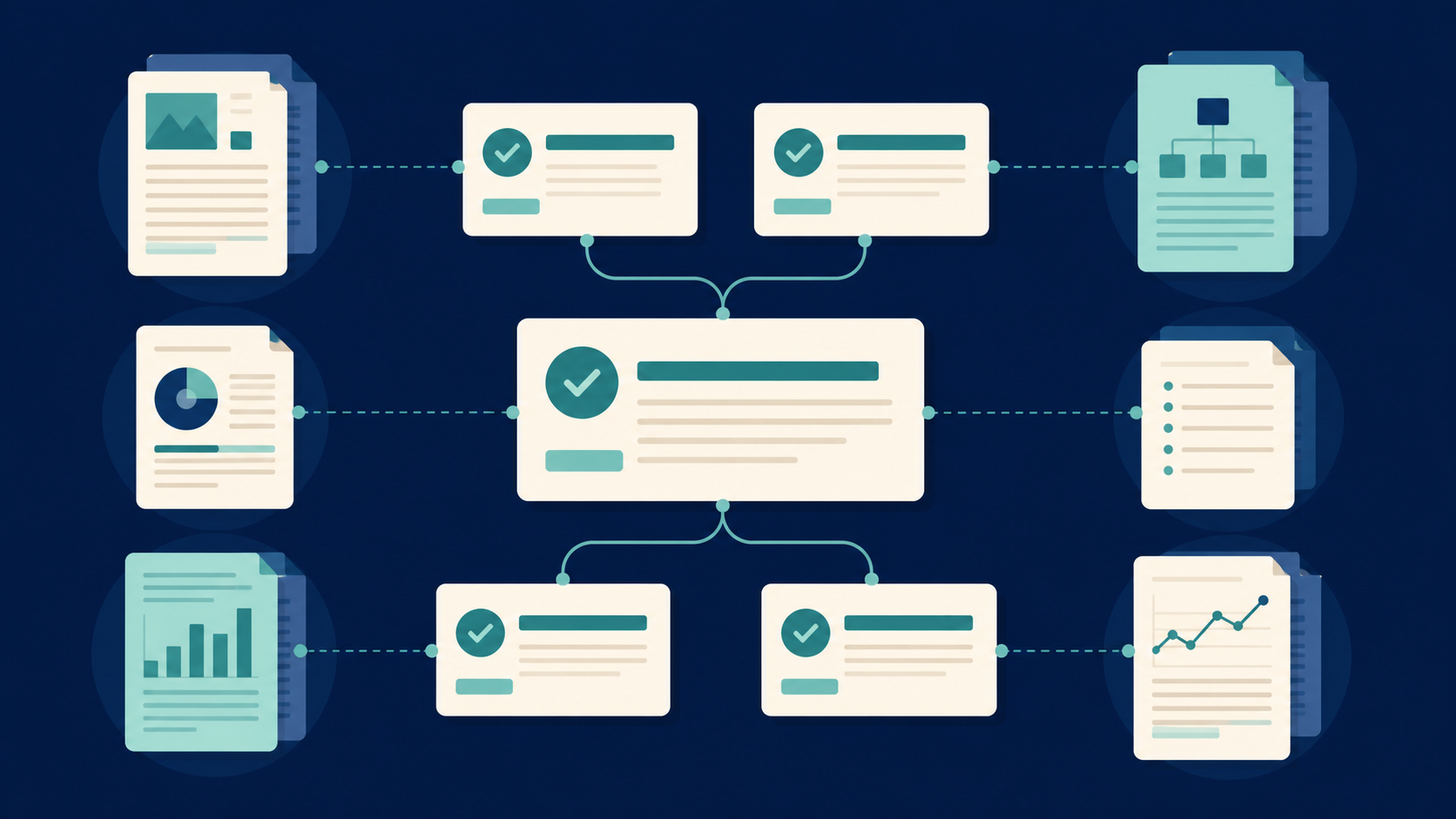
A source-led review of written inputs, outputs, owners, and exception rules, with practical limits for buyers and managers.
Philippines evidence
Six headline statistics, with limits
These figures describe the national or industry setting around Philippines-based remote work. They are screening context, not a promise about any applicant, provider, connection, or result.
CSF 2.0 functions
Decision accountability
Account standard
Review unit
Guaranteed outcomes
Evidence accessed
The research question: written inputs, outputs, owners, and exception rules
This report examines routine control as an operating control for a Philippines-based virtual assistant. The question is what record lets a manager see the input, action, exception, and owner decision without recreating the work.
NIST CSF 2.0 separates governance, identification, protection, detection, response, and recovery outcomes.[1][2] The framework is voluntary and non-prescriptive, so this article applies those outcomes rather than presenting a required formula.
What the evidence supports
NIST describes outcomes organizations can use regardless of size, sector, or maturity.[1] Govern maps to ownership; Protect maps to permissions; Detect maps to review; Respond maps to escalation; Recover maps to correcting the record.
That mapping supports a routine control record with a source, expected output, worker, completion proof, exception, and owner decision. It does not prove that a provider follows the record or that the record catches every error.
A practical routine
Begin with one task and define its routine control evidence. Review every completion during the first week. Move to sampling only after accurate work, then return to full review after a serious miss, process change, or access change.
Keep the record close to the work. A task ID, source link, output link, exception note, and reviewer are usually enough.
Decision table
How to use the evidence without overclaiming it
Each signal can improve a buyer’s questions, but none replaces candidate-level proof. Read the final column before turning a national number into a hiring assumption.
| Signal | Finding | Buyer use | Limit |
|---|---|---|---|
| Govern | CSF 2.0 adds governance. [1][2] | Name the owner and decision limit. | The framework does not assign roles. |
| Protect | Protection includes safeguards. [1] | Use named accounts and minimum access. | Limited access does not remove all risk. |
| Detect and respond | Detection and response are separate. [1] | Review samples and route exceptions. | A sample can miss an error. |
| Recover | Recovery continues the cycle. [1] | Correct records and instructions. | Corrections cannot undo every impact. |
People-first documentation
Google Search Central recommends explaining who, how, and why.[3] Those questions improve operating documentation: who owns the decision, how work is checked, and why the record exists.
A routine control document should help the next person act. If it only proves that someone filled out a form, it has failed.
Limits
This is a qualitative application of public guidance, not an audit, controlled study, legal opinion, or client measurement.
Review rates depend on task risk, volume, error history, and manager capacity. Qualified advice may be required.
Conclusion
The evidence supports treating routine control as a compact control with a named owner and visible limits.[1][2] Start with the source and finish line, limit access, review early work, and keep exceptions.
Practical implications
Match the work sample to the role
A useful test looks like the first small task the person will do after hiring. Keep all sample data invented or redacted, then score the same qualities for every candidate.
For buyers
Ask for a redacted routine control record.
For managers
Choose review frequency from risk and error history.
For assistants
Record sources, outputs, and exceptions while work is fresh.
For providers
Explain coaching, access, replacement, and incident ownership.
Methodology and limitations
How this report was built
We reviewed NIST CSF 2.0, its FAQ, and Google Search Central guidance on August 31, 2026.
We mapped source outcomes to routine control and separated claims from recommendations.
No client, worker, or provider data was used.
Five buyer questions
Frequently asked questions
What belongs in a routine control record?
Include the source, output, worker, proof, exception, and owner decision.
Review every task?
Review every task at launch. Later sampling depends on risk and error history.
Does this prove security?
No. Provider controls require direct evidence and testing.
What triggers review?
A serious miss, repeated errors, or system and access changes.
Numbered sources
Direct evidence used in this report
- The NIST Cybersecurity Framework (CSF) 2.0National Institute of Standards and Technology · 2024-02-26 · accessed 2026-08-31
- Cybersecurity Framework FAQsNational Institute of Standards and Technology · accessed 2026-08-31
- Creating helpful, reliable, people-first contentGoogle Search Central · accessed 2026-08-31